
Size is the most common question you ask us before buying boots. The good news is that the answer fits into one measurement: the length of your foot in centimetres. Here you'll find how to measure it, how to read the chart, what to do with a thick winter sock and what to choose if your foot falls exactly between two sizes.
The short version: in the evening, measure your longer foot from the heel to the tip of the longest toe and find that number in the chart. 27 cm means size 42, 28 cm means 43. There are no half sizes, so if your measurement falls between two rows, take the bigger one. With a thin summer sock, stick to the chart; with a thick winter sock you can go one size up. If the size doesn't fit, we'll exchange it.
Why you choose size by your foot, not by your old boots
The number on your old boots tells you what size that manufacturer makes, not how long your foot is. The same number on boots from different brands doesn't necessarily mean the same length. Your foot length in centimetres doesn't depend on what boots you wore before, which is why it is the most reliable reference point.
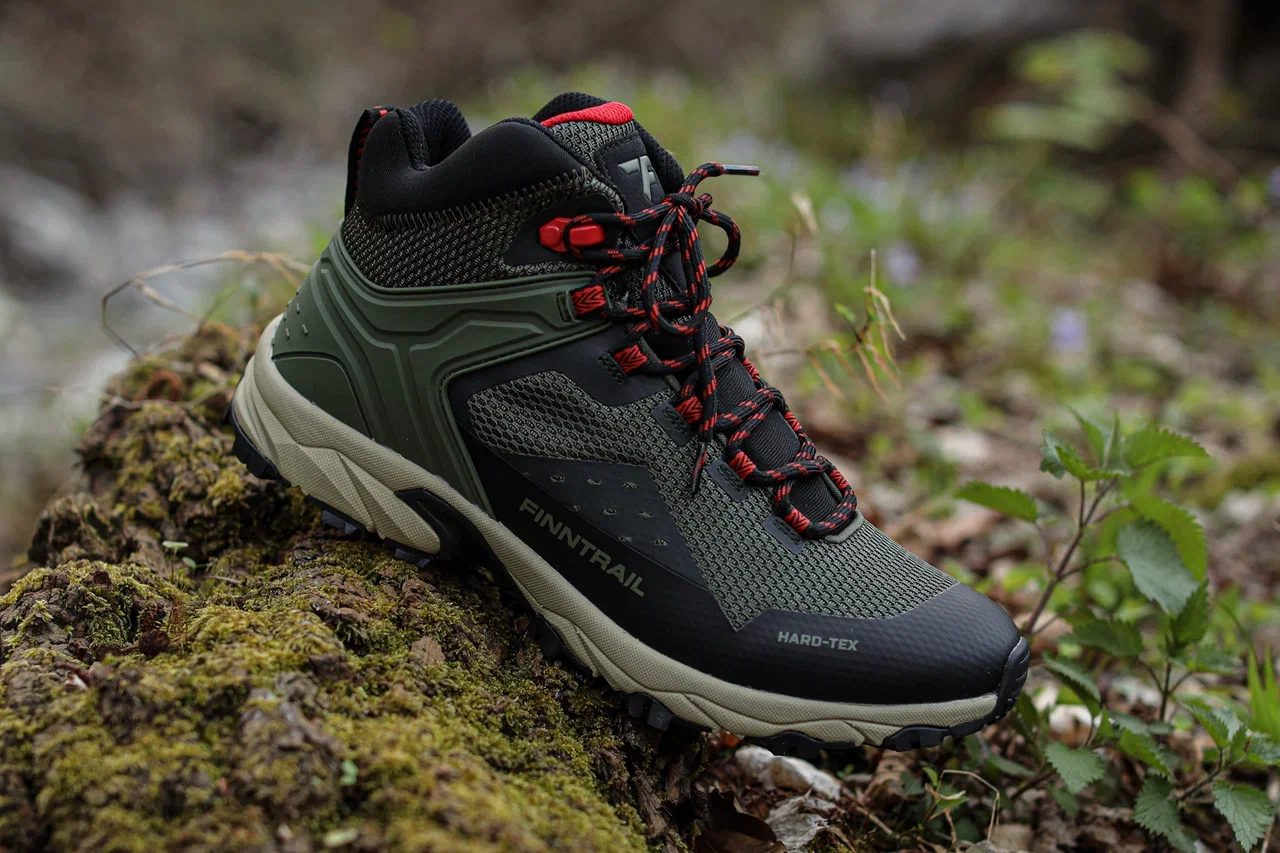
Boots that are too small squeeze your foot and tire you quickly. Boots that are too big don't hold your foot: it slides around, rubs, and you lose stability on uneven trails. Either way the problem is the same, just in different places, so the goal is not “with room to spare” but an exact match to your foot.
How to measure your foot in five minutes
- Measure in the evening. After a day on your feet, your foot is slightly bigger, and that's how it is on a hike too.
- Stand on a sheet of paper against a wall, heel touching the wall. Weight on both feet, not sitting down.
- Mark the tip of your longest toe. It's not always the big toe; sometimes the second toe is longer.
- Measure the distance from the heel to the mark in centimetres, with a ruler or tape measure.
- Repeat with the other foot and go by the longer one.
If you measure with a sock on, use the one you'll wear on the hike. Then the number will reflect the real situation inside the boot.
Size chart: foot length and EU size
This FINNTRAIL chart applies to the whole men's footwear range. Which sizes are made for a specific model, you can see on the product page next to the size selector.
| Foot length | EU size | US size |
|---|---|---|
| 23 cm | 38 | 5 |
| 24 cm | 39 | 6 |
| 25 cm | 40 | 7 |
| 26 cm | 41 | 8 |
| 27 cm | 42 | 9 |
| 28 cm | 43 | 10 |
| 29 cm | 44 | 11 |
| 30 cm | 45 | 12 |
| 31 cm | 46 | 13 |
| 32 cm | 47 | 14 |
Each size is exactly one centimetre longer than the previous one. So if your foot is 27.3 cm, it no longer fits the size 42 row and your size is 43.
The sock changes everything: thin or thick
The chart assumes a foot in a regular sock. When autumn turns into winter, socks get thicker, and this is where most mistakes happen: boots that were perfect in September start to pinch in December with a wool sock.
- Thin summer sock. For example, synthetic COOLMAX 3202 (15 €) are light and cooling, made for the warm season and active movement. With a sock like that, choose your size straight from the chart.
- Thick winter sock. EXTREME MERINO 3203 (29 €) are thicker-knit merino wool socks for deep winter. If you'll wear your hiking boots with these, you can go one size up.
- Insulated boots. With cold-season boots a warmer sock is the norm, not the exception. For example, the insulated ROVER 5175 are rated down to −15 °C, and for long periods standing still a thicker sock is worth it, so plan your size with it from the start.
If you're not sure which sock suits you, you'll find a comparison in the article Thermal underwear: merino wool or synthetics? It explains why merino usually wins for the feet.
You're between sizes: what to do
FINNTRAIL boots don't come in half sizes, so the rule is simple: if your foot is between two sizes, take the bigger one. Nothing will fix a boot that's too small on the trail, while a slightly bigger one you can simply lace tighter.
A bigger size also makes sense when:
- your foot is wider than average;
- you'll wear thick warm socks in the cold season;
- you'll go on long hikes and want more room for your foot to move, since it swells a little over the day.
But don't go up more than you need. Two sizes “to be safe” means poorer foot hold, less stability and more friction as you walk. One size up is the limit that a thick sock or a wide foot justifies.
How to check your boots at home when they arrive
The chart gives you the right starting point, but your foot has the final say. When the parcel arrives, try the boots on the way you'll really wear them:
- In the evening and with a hiking sock. Not a thin everyday one, but the one you'll wear on the trail.
- With your own insoles, if you use special ones. They take up space that you need to account for right away.
- Lace up firmly. Only a laced boot shows how it holds your foot and ankle.
- Walk down some stairs. Going downhill, your toes shouldn't hit the front of the boot. If they do, it will hurt on a long hike.
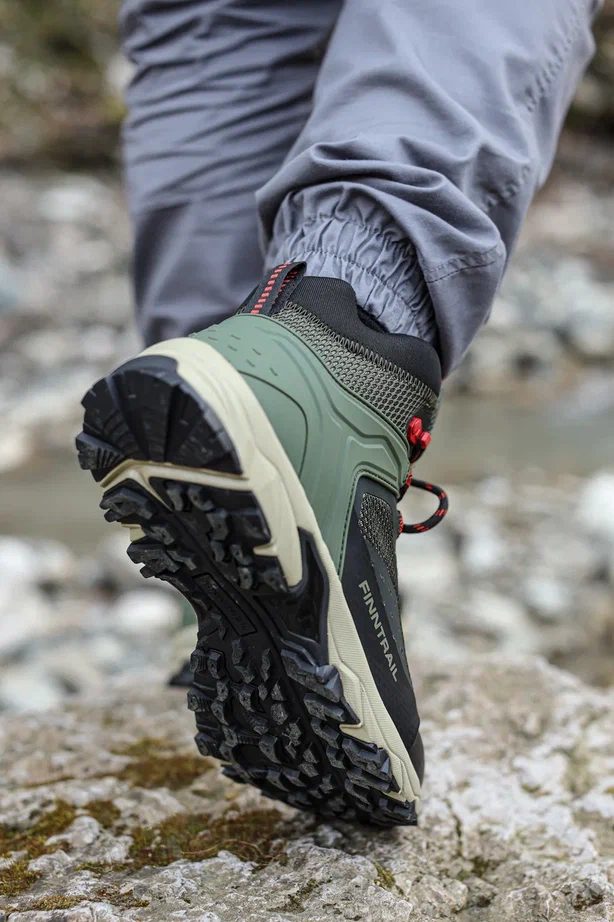
Try them on at home on a clean floor and keep the tags on until you're sure. You can return them within 30 days if the item is unused, with tags and packaging, and the return is free. We'll exchange the wrong size for the right one, or refund your money if needed. All the terms are on the Delivery and returns page.
When these rules don't apply
Everything above applies to hiking boots and shoes you wear with a regular sock. Two types of footwear are chosen differently:
- Wading boots. They are worn with stockingfoot waders, whose sock is made of neoprene. FINNTRAIL wading boots are already designed to fit the neoprene sock plus a medium-thickness sock under it. No need to size up: choose by your real foot length in the chart.
- Wet wading shoes without waders. These shoes fit about one and a half sizes larger, so their size has to be judged by the specific model. The product page of our draining STREAM 5205 shoes tells you what to choose. To learn about wading without waders, read the article What is wet wading and how to prepare for it properly?
When a model fits differently from the chart, it says so on its page in the section “What size should I choose?”. It's worth reading before you order.
What about clothing size?
People who ask about boots usually ask about trousers or a jacket too. Clothing size works on a different principle: not by the garment's measurements but by your body measurements, so you'll need your height, chest, waist or inseam. All the charts by category are collected on the Men's FINNTRAIL sizes page.
If you plan to wear a warm layer under the jacket or trousers, mention it when you ask about size. That decides whether to stay with your size or take one size up.
Frequently asked questions
42. A measurement of 26.5 cm falls between size 41 (26 cm) and size 42 (27 cm), and between sizes we take the bigger one. With a thick winter sock you could even consider 43.
The measurement. In the chart, 27 cm corresponds to size 42. The number on old boots depends on their manufacturer, while the foot length is yours. If 43 has always been comfortable for you, chances are you wore a thick sock or your foot is wide: then 43 may also be the right choice.
Yes. The chart is for men, so a woman should go one size smaller than her usual women's size on the US scale: men's US 8 corresponds to women's US 9. The simplest way is to measure your foot and find the centimetres in the chart.
Enough that your toes don't hit the front of the boot when walking downhill. Check it with the boot laced up and a hiking sock on, ideally walking down stairs.
Don't wear them outdoors and keep the tags on. Write to us at pagalba@finntrail.lt or call +370 614 98366: within 30 days we'll exchange the size or refund your money, and the return is free.
Hiking boots we have right now
Several models for different needs. All of them follow the same size chart, and which sizes are available now you can see on the product page.
- OUTDOOR 5178, 109 €: light three-season membrane hiking shoes, low cut.
- WAYSIDE 5179, 119 €: high-cut hiking boots with ankle support and a HARD-TEX® membrane.
- TRACTIONMID 5191, 99 €: membrane hiking boots with a deep tread for long walks.
- ROVER 5175, 117 €: insulated membrane boots for the cold season, down to −15 °C.
- STREAM 5205, 89 €: light draining shoes for streams and the warm season.
Free delivery, a 24-month warranty, and if the size doesn't fit, we'll exchange it. Not sure which one to choose? Send us your foot length and the sock you'll wear, and we'll tell you which size is yours. After a hike, care for your boots as described in the guide How to clean membrane clothing and boots.

